




Packed house for People’s Hearing on federal plan to increase offshore oil and gas drilling
January 16, 2026
SANTA BARBARA, CA—Environmental groups, businesses, and high-profile advocates rallied today against the Trump Administration’s plan to open the entire California coast to expanded offshore oil and gas development.
Nonprofit groups organized a People’s Hearing with speakers including Ted Danson, actor, advocate, and Oceana board member; Congressman Salud Carbajal; Assemblymember Gregg Hart; Santa Barbara County Board of Supervisors Laura Capps and Joan Hartmann; and local tribal, student and business leaders. Maggie Hall, Deputy Chief Counsel of the Environmental Defense Center, gave a presentation about the Trump plan, which would especially impact the Santa Barbara Channel. This was one of many People’s Hearings that are being held along the California coast showing bipartisan opposition to this plan for increased drilling.
“Californians know all too well the horrific price of oil spills,” said Ted Danson actor, advocate, and Oceana board member. “From Santa Barbara in 1969 to Huntington Beach in 2021 to today, our state continues to suffer from offshore drilling’s destructive legacy. When I talk to people from both political parties, everyone agrees that the risk of expanded offshore drilling is too high for California’s coastline, fisheries, wildlife, communities, and local economies. We’ve stopped this before and we can do it again. This is the moment for all of us to stand up and speak loudly to protect our coast from offshore drilling — for the sake of our oceans, our state, and future generations.”
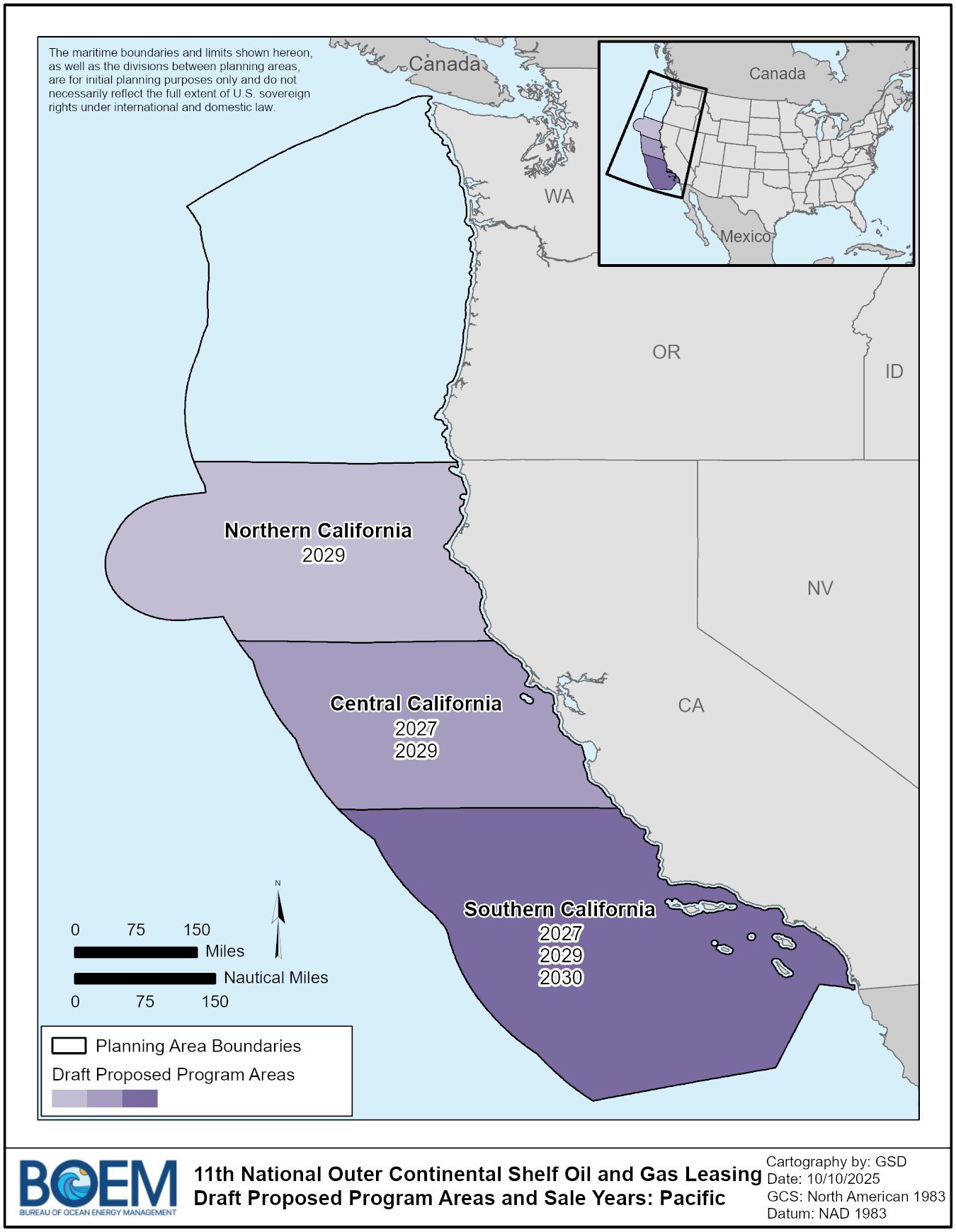
In November 2025, the Department of the Interior announced its draft plan to open the California Coast, including fragile regions like the Santa Barbara Channel, to new oil and gas development. The 60-day comment period ends on January 23, 2026.
A national coalition of environmental groups, advocates, and elected leaders are opposing the plan. Increased drilling in the ocean not only threatens more oil spill disasters on the California coast. It also would significantly harm air quality, public health, the Earth’s climate, and wildlife in one of the most biodiverse marine areas in the world. Community members are advocating for the protection of our favorite beaches, local surf spots, wildlife, coastal economy, and a clean energy future.
The Draft Program includes 34 lease sales in 21 of the 27 Outer Continental Shelf Planning Areas—amounting to roughly 1.27 billion acres. Of those, 6 lease sales would occur in the Pacific, with 3 of them in the Southern California Planning Area in 2027, 2029 and 2030.
The California Current upwelling system is one of the top five most biodiverse and rich marine ecosystems in the world, providing a high level of unparalleled productivity that supports fisheries, tourism, and livelihoods. This region includes the Channel Islands National Marine Sanctuary and the Chumash Heritage National Marine Sanctuary, as well as federal and state Marine Protected Areas. This area is also an important migratory route and feeding area for endangered blue, humpback, and fin whales, which are vulnerable to oil and gas drilling activities, ship strikes, seismic surveys, and oil spills.
California coastal communities rely heavily on these incredible resources to support our local economies. California’s coastal economy is heavily dependent on tourism, recreation, and fishing. In 2019, ocean related tourism and recreation contributed $28 billion to California’s GDP, which grew from $19.5 billion in 2016.
Studies from the Ocean Protection Council found that the most frequently reported coastal activity is “sightseeing” specifically along scenic highways, bringing in revenue to coastal cities not tied to ocean centered businesses. The administration’s plan for new offshore oil and gas development puts these valuable industries at risk, as seen when the 2015 Plains Oil Spill closed fishing grounds and damaged the region’s tourism businesses.
“Today’s People’s Hearing in Santa Barbara sends a clear message to Washington, D.C.: California does not support new offshore oil and gas leases,” said Ted Morton, Executive Director, Santa Barbara Channelkeeper. “Expanding offshore drilling directly threatens marine wildlife and habitats, puts coastal economies and communities at risk, and undermines critical climate goals. Santa Barbara knows firsthand about the damage from offshore drilling and devastating spills. Channelkeeper stands with our community and state in calling on the U.S. Department of the Interior to remove California waters from the proposed federal five-year leasing program and instead prioritize policies that protect coastal waters, fisheries, and recreational businesses.”
Today’s People’s Hearing was organized by the Environmental Defense Center, Surfrider Foundation, Oceana, Santa Barbara Channelkeeper, Sierra Club, Fearless Grandmothers, and UCSB’s Environmental Affairs Board.
###